Understanding Network Devices: Modem, Router, Switch, Firewall & More
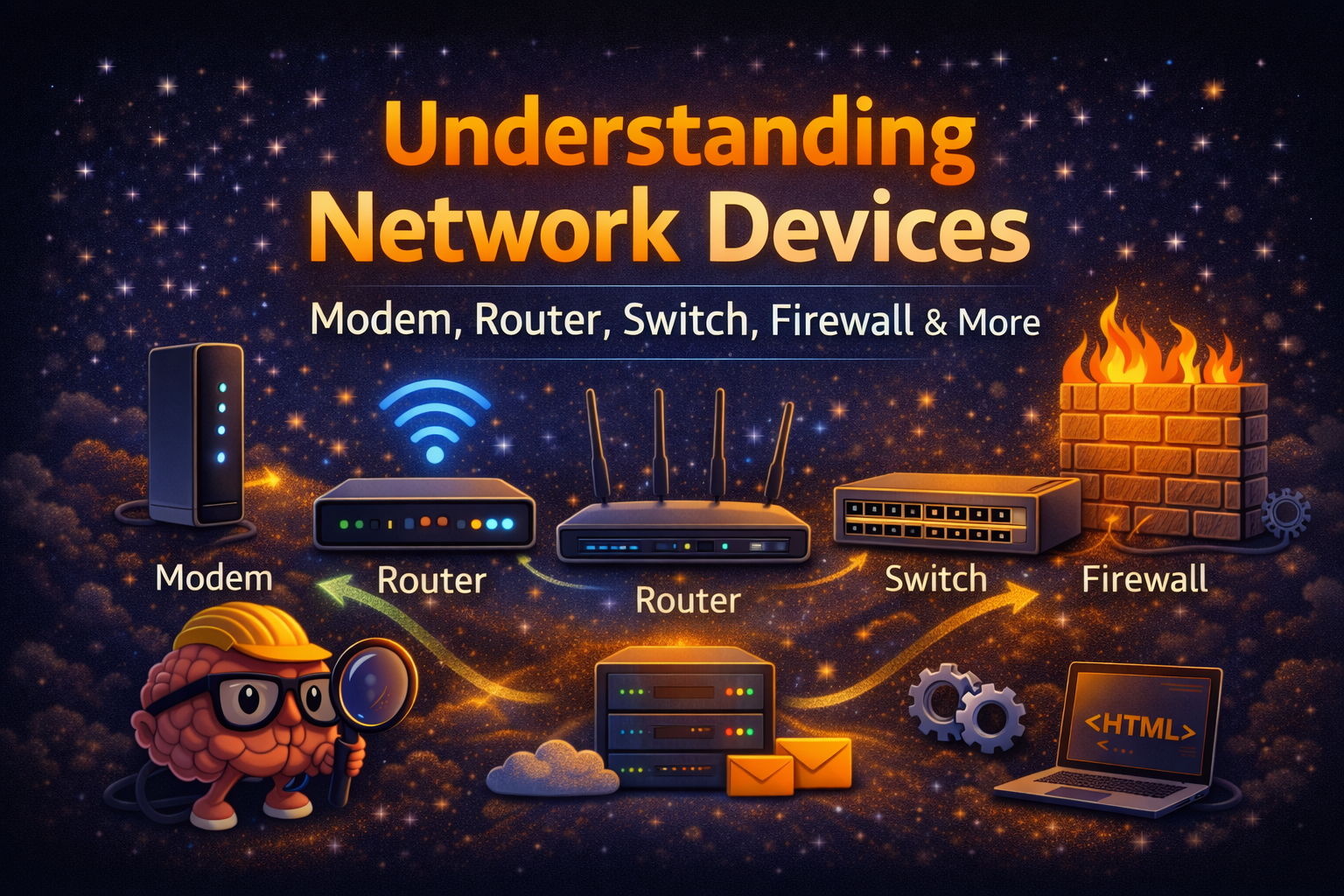
Do you know how the Internet reaches to our Home, Office and Datacentres?
In this blog, we’ll understand the most common network devices Modem, Router, Switch, Firewall, and Load Balancer with simple explanations and real-world analogies.
How does the Internet reach to our Home or Office?
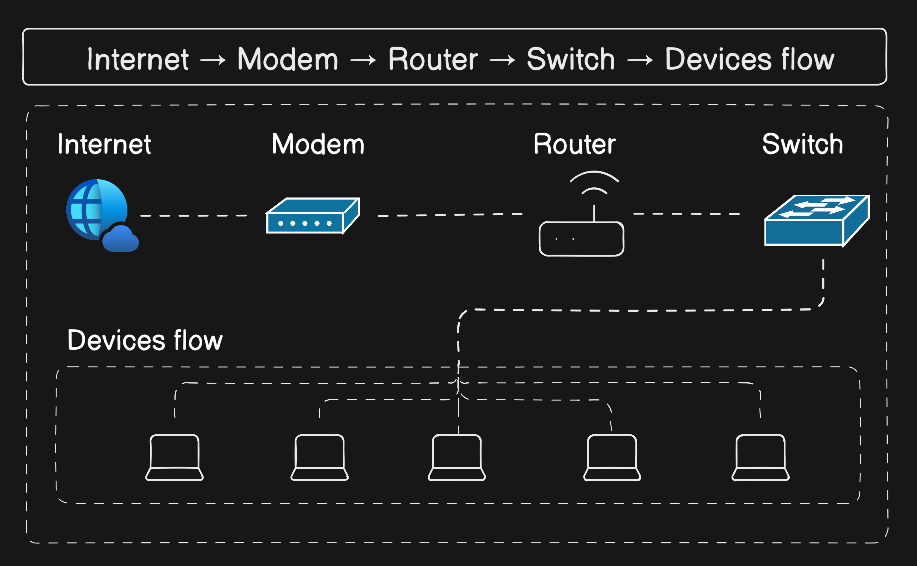
When you open a website, our request go through multiple network devices before reaching the server. Each device has a specific role and responsibility and together they form the backbone of modern networking. First our request go to Modem and then it goes to the Router and then Firewall and then Load Balancer then at the end Server.
Before diving into individual devices, let’s look at the overall flow:
Internet → Modem → Router → Switch → Our Devices
Each device solves a specific networking problem.
What is a Modem?
Modem(modulator-demodulator) “mo” “dem” - A modem connects our local network to the internet.
It converts signals from our Internet Service Provider (ISP) into data that our devices can understand easily.
What is a Router? (Traffic Director)
A router directs traffic between different networks.
It decides where our data should go inside our local network or out to the internet.
Router is like a traffic police officer, deciding which road our data should take.
Key differences:
Modem helps to connects to the internet.
Router helps to manages traffic of the internet.
Switch vs Hub
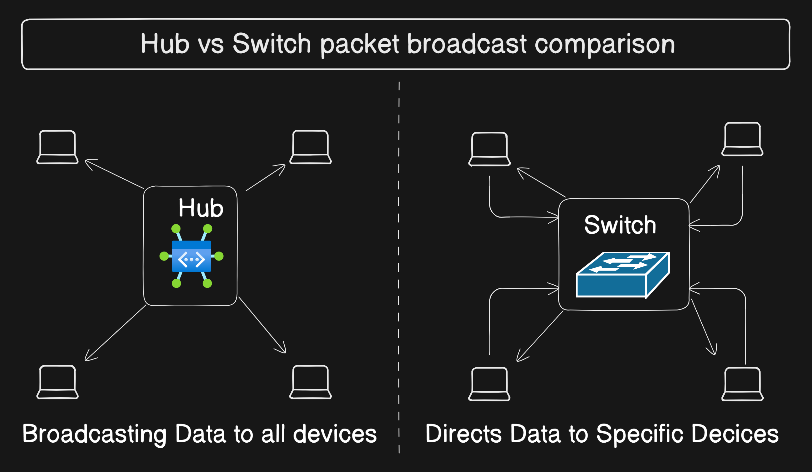
Hub (Old & Inefficient) : A hub sends data to every connected device, whether it is needed or not.
Hub is like shouting a message to everyone in a room.
Switch (Smart & Efficient) : A switch sends data only to the intended device using MAC addresses.
Switch is like calling someone by name in a room.
Modern networks use switches, not hubs.
What is a Firewall? (Security Layer)
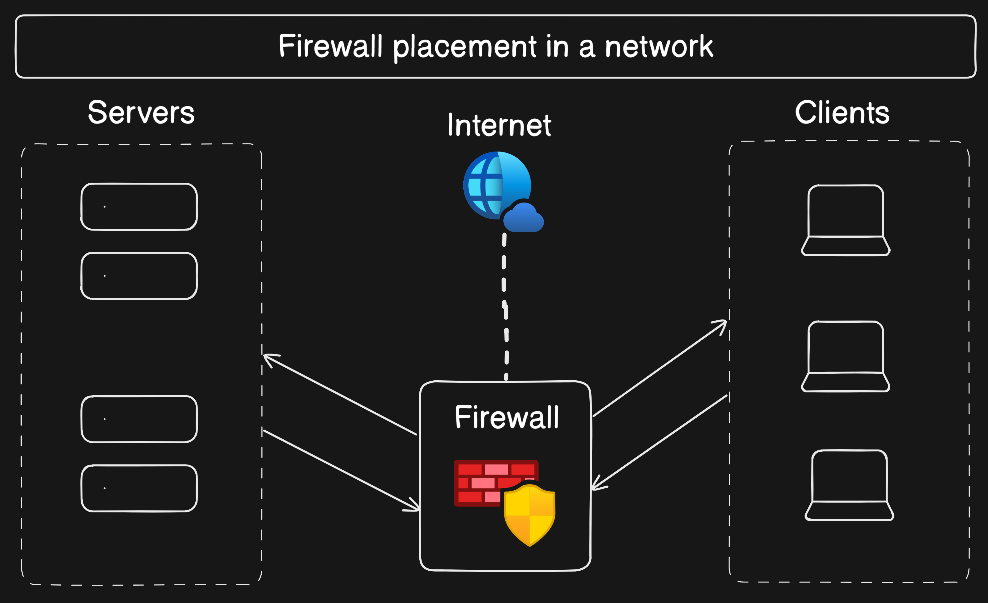
A firewall monitors and controls incoming and outgoing network traffic.
It allows safe traffic and blocks suspicious or unauthorized access.
Firewall is like a security gate checking IDs before entry if it seems suspicious not authorite to come in(entry).
What is a Load Balancer? (Scalability Hero)
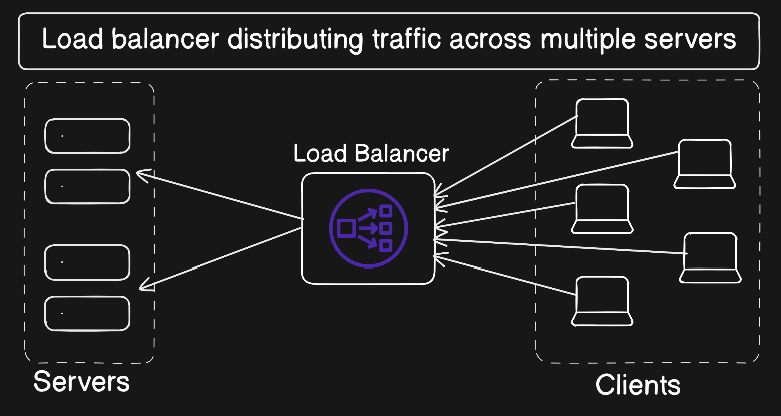
A load balancer distributes incoming traffic across multiple servers.
This prevents overload and improves availability.
Load balancer is like a toll booth distributing cars across multiple lanes.
Real-world usage:
Used in production systems
Critical for high-traffic apps
Why This Matters for Software Engineers?
Understanding network devices helps software engineers:
Debug production issues
Design scalable backend systems
Communicate better with DevOps and infra teams
Conclusion
Network devices may look complex at first, but each one solves a specific problem.
When we understand where these devices placed in a system and what role they play, networking becomes much easier to reason about especially in real world production environments.
This is essential for building reliable and scalable applications.
I hope you understand about the Network Devices, If you would like to read about DNS Record Types. You may also connect me from LinkedIn.
Thank you for reading this article.
About the author
I am a Front-end Developer with 7 years of experience, started from HTML, CSS and JavaScript then switched into any UI Development again switched into React Development. Now Looking for anything like in language and started digging into that slowly.
Comments
Join the discussionNo comments yet. Be the first to comment.


